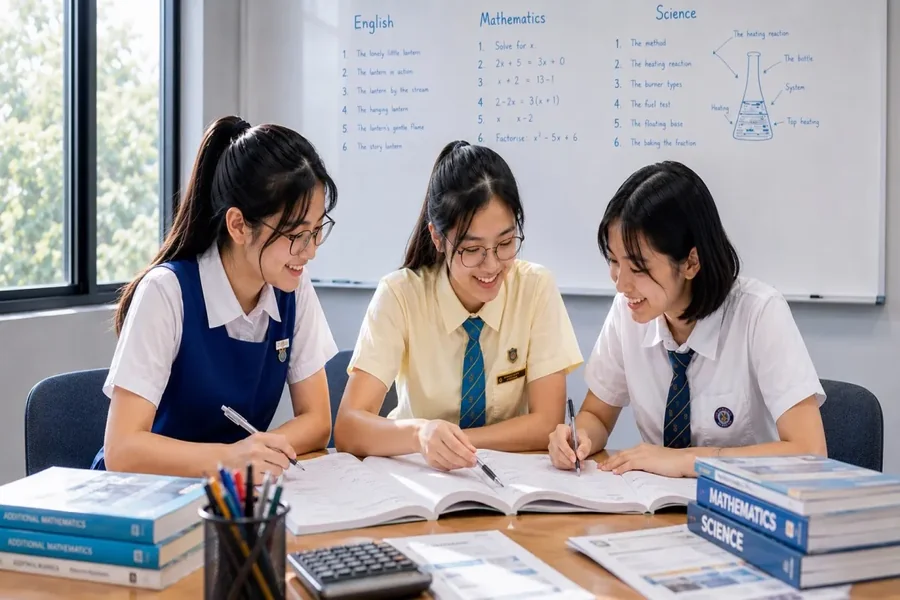
Compare IP, O-Level and JC pathways in Singapore and discover how a tuition center in Singapore can support students through different academic demands.
Choosing an appropriate academic pathway is an important decision for students entering secondary education in Singapore. The Integrated Programme (IP), O-Level route and Junior College (JC) pathway offer different approaches to learning, assessment and preparation for higher education. Although these routes share the objective of developing academic knowledge, their structures and expectations vary. Understanding these differences allows parents and students to make decisions based on learning preferences, strengths and long-term goals.
Each pathway also presents distinct academic challenges, particularly as students progress towards national examinations or university admission. A tuition center in Singapore can provide additional subject guidance, helping learners strengthen their understanding, address individual difficulties and adapt to different assessment requirements. However, effective preparation depends on recognising what each route involves rather than following the same study approach for every student.
1. Understanding the Integrated Programme (IP)
The Integrated Programme (IP) allows academically strong students to skip the GCE O-Level examinations and progress towards A-Levels, the IB Diploma or other pre-university qualifications.
It offers opportunities to explore subjects in greater depth and take part in enrichment activities. However, students must manage their studies independently and maintain consistent progress.
Key skills include:
- Independent learning: Managing studies and assignments.
- Critical thinking: Evaluating information.
- Subject exploration: Learning beyond basic requirements.
- Time management: Balancing studies and activities.
IP suits students who can take responsibility for their learning.
2. Understanding the O-Level Academic Pathway
The O-Level route provides a structured secondary education programme leading to the Singapore-Cambridge GCE O-Level examinations. Students study a combination of compulsory and elective subjects, depending on their school and subject combinations.
Unlike the IP route, this pathway includes a major national examination at the end of secondary education. Results help students explore further opportunities, including junior colleges, Millennia Institute, polytechnics and other post-secondary institutions, subject to admission requirements.
Preparation involves developing a sound understanding of each subject while becoming familiar with examination formats.
For example, Mathematics requires accurate calculations and logical problem-solving, while Chemistry involves understanding concepts, interpreting experimental information and applying scientific principles. English assessments require students to demonstrate comprehension, writing and communication skills.
Students can improve their preparation through:
- Reviewing topics consistently instead of relying on last-minute revision.
- Practising past examination questions to understand assessment expectations.
- Identifying recurring mistakes and revisiting difficult concepts.
- Developing effective answering techniques for different question types.
The O-Level pathway offers a clearly defined academic milestone, making organised preparation particularly important.
3. Understanding the Junior College (JC) Pathway
Junior College is a two-year pre-university route that prepares students for the GCE A-Level examinations. Students can enter after secondary education or through the Integrated Programme (IP).
The curriculum covers advanced subjects such as Mathematics, Sciences, Humanities and General Paper. Students must develop analytical thinking and apply knowledge to unfamiliar questions.
Key academic priorities include:
- Subject knowledge: Understanding complex concepts.
- Analytical writing: Building clear, supported arguments.
- Application skills: Solving unfamiliar questions.
- Independent revision: Managing subject syllabuses effectively.
Good study habits help students manage JC’s academic demands.
4. Key Differences Between IP, O-Level and JC Pathways
Although these routes can lead towards university education, their structures and academic milestones differ.
| Feature | Integrated Programme | O-Level pathway | Junior College |
| Main purpose | Integrated secondary and pre-university education | Secondary education with national examinations | Pre-university preparation |
| Typical duration | Around six years, depending on the programme | Four to five years, depending on the course | Two years |
| Major examination | A-Level, IB or another recognised qualification | GCE O-Level | GCE A-Level or relevant qualification |
| Learning emphasis | Enrichment and independent learning | Subject mastery and examination preparation | Advanced analysis and application |
| Assessment approach | School-based assessments and programme-specific examinations | School assessments and O-Level examinations | Coursework where applicable and major examinations |
Understanding these differences helps families identify which learning environment may suit a student’s abilities, interests and academic goals.
5. How Additional Academic Support Differs Across Pathways
Different educational pathways require different support:
- IP students: Advanced concepts and independent learning.
- O-Level students: Topic revision and exam practice.
- JC students: Advanced subjects and higher-order questions.
Mavis Tutorial Centre provides structured lessons to strengthen understanding and address learning gaps.
6. How Parents Can Help Students Choose the Right Pathway
Selecting an academic route should involve more than considering examination results or the perceived reputation of a particular programme. Parents should also evaluate their child’s learning preferences, academic interests and ability to manage different expectations.
Consider the following factors:
- Learning independence: Does the student enjoy exploring topics beyond classroom instruction?
- Examination preferences: Would a structured national examination route provide clearer academic milestones?
- Subject interests: Which subjects does the student enjoy and perform well in?
- Long-term goals: What further education opportunities might align with the student’s interests?
- Personal development: Which environment would encourage confidence, motivation and balanced growth?
Discussions with teachers and school counsellors can also provide useful perspectives before making an informed decision.
Final Thoughts
The IP, O-Level and JC pathways provide different routes through Singapore’s education system, each offering distinct learning experiences and academic expectations. While IP encourages independent exploration, the O-Level route provides structured examination milestones, and JC develops advanced subject knowledge in preparation for university.
Parents should consider their children’s abilities, interests and learning preferences before deciding which pathway may be appropriate. As academic demands increase, suitable supplementary guidance can help students strengthen subject understanding and develop effective study habits. Mavis Tutorial Centre is one option families can explore when considering additional academic support. For further information about its learning programmes, parents can visit mavistutorial.com and consider how structured guidance may complement their children’s educational journey.
Frequently Asked Questions
1. What is the main difference between IP and the O-Level pathway?
The Integrated Programme allows students to bypass the GCE O-Level examinations and progress towards a pre-university qualification through an integrated curriculum. The O-Level pathway includes national examinations at the end of secondary education. Both routes can lead to further academic opportunities, depending on qualifications and admission requirements.
2. Can IP students enter Junior College?
Yes. IP students can progress to the pre-university stage of their programme, which may be offered through a partner junior college. Their progression depends on the programme’s academic requirements. They generally do not need to sit the O-Level examinations as part of the standard IP route.
3. Is the O-Level pathway suitable for students who want to attend university?
Yes. Students who perform well in their O-Level examinations can apply to suitable pre-university programmes, including junior colleges. After completing the relevant qualifications, they may apply to universities subject to admission criteria. The pathway provides several opportunities for further academic development.
4. Why is Junior College considered academically demanding?
JC subjects involve more advanced concepts and require stronger analytical and application skills. Students must manage extensive syllabuses while developing structured arguments and independent revision habits. Consistent preparation is important for handling A-Level assessment requirements.
5. How can a tuition center in Singapore support students across different pathways?
A tuition centre can provide subject-specific explanations, additional practice and guidance based on individual learning needs. O-Level students may benefit from examination preparation, while IP and JC students may require deeper conceptual understanding and advanced application skills. The appropriate support depends on each student’s curriculum and academic goals.