
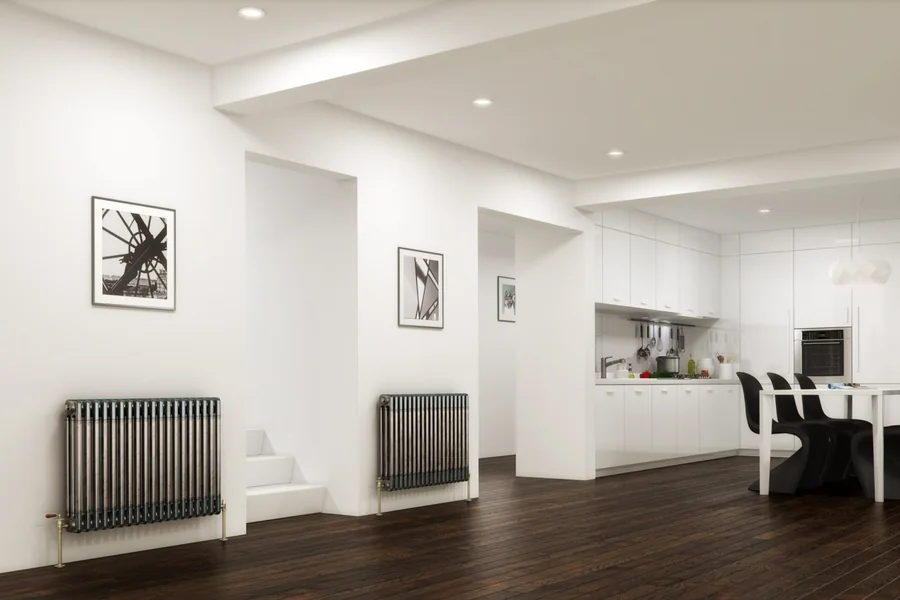
Choosing the right size traditional column radiator can feel tricky. The wrong choice might leave your room too chilly or annoyingly hot. This guide will help you measure, calculate BTUs, and pick the perfect fit for your space.
Keep reading to find the best solution!
Measuring Your Room Dimensions for Radiator Sizing
Start with measuring the room’s length, width, and height. Factor in insulation quality or draughty windows—they can change heating needs fast!
How do I calculate the dimensions of my room?
Calculating your room’s dimensions is the first step to choosing the right radiator size. Accurate measurements will ensure proper heating for the space.
- Measure the room’s length in metres using a tape measure. Write this down to avoid forgetting it.
- Do the same for the width of the room, also in metres.
- Check the ceiling height from floor to top and record it too. High ceilings often need more heat, so don’t skip this step.
- Multiply these three numbers together: length × width × height. This gives you the volume of your room in cubic metres (m³).
- Note factors like large windows with blinds or poor insulation; these can affect heating needs and BTU calculations later on.
Accurate dimensions are vital before any other step when sizing traditional white or black column radiators!
Why should I consider ceiling height and insulation?
Ceiling height matters because taller rooms trap more air, making them harder to heat. A room with high ceilings needs a radiator with a higher BTU output. For example, if two rooms share the same floor size but differ in ceiling height, the larger volume demands more heating power.
Insulation plays a key role too. Poorly insulated spaces lose heat quickly through thin walls or single-glazed windows. Double glazing and draught-proofed doors help keep warmth inside and reduce energy use.
Choosing cheap designer radiators without checking insulation may lead to higher bills or an underheated room. “>A well-insulated home saves money by needing less heat,” say experts from Planet Radiators.
Understanding Heat Output Requirements
Every room needs the right heat to stay warm and cosy. Knowing your room’s size and purpose can help you find the perfect radiator strength.
How do I calculate the BTU needed for my room?
Calculating the BTU needed ensures your room stays warm and cosy. Use the steps below to find this number quickly and accurately.
- Measure your room length, width, and height in metres. Multiply these values together to get the room’s volume.
- Consider the insulation quality of the space. Poor insulation or single-glazed windows may need higher BTU.
- Factor in ceiling height. Taller ceilings require more heat output than standard ones.
- Include heating needs based on usage. A kitchen needs less than a living room, as cooking adds heat.
- Use an online BTU calculator for fast results. Input your measurements and other details for an exact figure.
- Pick a radiator that meets or slightly exceeds this number. A shortage of BTU will leave the room cold.
- For example, a 4m x 5m room with a 2.5m ceiling needs about 4000 BTUs if well insulated but could need more with draughty windows.
White column radiators can deliver high BTUs, making them ideal for larger spaces or rooms with poor insulation using hot water systems effectively!
How does room usage affect heating needs?
Different rooms have different heating needs. A living room or reception area usually requires more heat, as these spaces are often larger and see regular use. In contrast, hallways or less-used areas may only need a radiator with a lower output.
Rooms with high activity levels, like kitchens or playrooms, tend to produce extra warmth naturally. Bedrooms might require moderate heating for comfort at night. Spaces used by many people can benefit from higher BTU radiators to keep everyone cosy during colder months.
Choosing the Right Number of Radiator Columns
The number of radiator columns affects how much heat it gives off and its style. Picking the right one depends on your room’s size and how warm you want it to be.
When should I use 2-column radiators?
2-column radiators suit small rooms, narrow hallways, or spaces with limited wall area. They provide decent heat output without taking up much space. These radiators work well in areas with low heating demands but still add style to the décor.
Smaller homes or places like cloakrooms benefit from these. Specialist models, including School and Art Nouveau styles, make them a stylish choice for compact needs. If saving space is key while maintaining efficiency, 2-column designs are ideal.
Are 3 or 4-column radiators better for larger rooms?
4-column radiators are better for larger rooms due to their higher heat output. They provide substantial warmth without overwhelming the space. These radiators come in three heights and start at £77.00 (460mm), excluding VAT, making them both powerful and cost-effective.
3-column radiators are slimmer, offering heights up to 745mm with widths ranging from 290mm to 1430mm. While suitable for medium-sized spaces, they might not meet the heating demands of bigger areas like large living rooms or reception halls efficiently.
Considering Radiator Placement
The radiator’s position can make or break a room’s warmth. Place it wisely to spread heat evenly and keep the chill at bay.
Should I choose horizontal or vertical radiators?
Horizontal radiators work well under windows or along wide walls. They come in colours like white (£89–£392), cream (£139–£584), and raw metal (£116–£494). Metallic copper options start at £98, making them both stylish and functional.
These radiators suit traditional homes while keeping furniture placement flexible.
Vertical radiators save space on narrow walls. Prices range from £119 for white to £531 for a bold orange finish. Raw metal models cost between £174 and £446, adding an industrial touch to modern spaces.
Anthracite finishes (£89–£400) complement minimalist designs while creating a sleek look in smaller rooms.
Where is the best position for radiator heat distribution?
Placing radiators under windows is the best spot for even heat spread. Cold air from windows mixes with warm air rising from the radiator, creating a steady flow across the room. This setup also helps prevent condensation on window panes.
Avoid placing radiators behind furniture or long curtains. These block heat circulation and waste energy. Short blinds or drapes work better to keep warmth moving freely into the space, boosting comfort and efficiency.
Conclusion
Choosing the right traditional column radiator doesn’t have to feel tricky. Measure your room, check its heat needs, and pick a style that fits. Focus on both function and form for the best results.
A well-placed radiator keeps your space warm and looks good doing it. Warm toes and cosy vibes are just a smart choice away!