
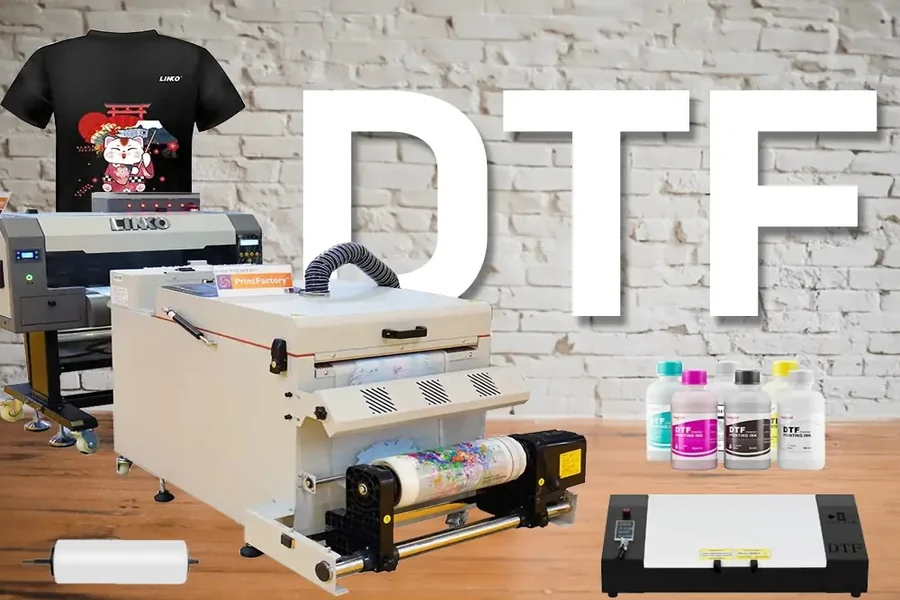
If you want to start printing custom designs on t-shirts, hats, or bags, a DTF printer is a smart choice. DTF stands for Direct to Film, and it lets you create vibrant prints that work on cotton, polyester, or blends. In 2025, these printers are more affordable and user-friendly than ever. This guide walks you through the steps to pick the right one. We cover the basics, key factors, and top options for beginners. Whether you run a small business or just print for fun, you will find tips here to make a good buy. Let’s dive in.
What is DTF Printing?
DTF printing is a method where you print designs on a special film, add adhesive powder, and heat it to transfer to fabric. It starts with an inkjet printer that uses pigment inks on PET film. Then, you shake on powder that sticks to the wet ink. A curing oven or heat press dries the powder into a sticky layer. Finally, you press the film onto your item with heat. This bonds the design right to the material.
Unlike DTG, which prints directly on fabric, DTF does not need pre-treatment. It works on dark or light colors without issues. Prints come out soft and stretchy, so they do not crack after washes. In 2025, DTF is popular for small shops because it is quick to set up. You can print one item or hundreds with the same ease. Many use it for logos, photos, or patterns on apparel.
The process is clean too. No big mess like screen printing. All you need is a printer, film, ink, powder, and a heat press. Costs have dropped this year, making it open to more people.
Why Choose a DTF Printer in 2025?
This year brings cool updates to DTF tech. Eco-friendly inks are standard now, with low VOCs to cut down on fumes. They still give bright colors that last 50+ washes. Automation is big too. New printers have auto powder shakers and AI checks for print quality. This saves time and cuts errors.
Demand for custom gear is up, thanks to online shops and events. DTF handles small runs well, so you can test designs without waste. Trends like UV DTF for hard surfaces, like phone cases, are rising. Faster curing times mean quicker turnaround. If you want to sell prints, DTF gives you an edge over basic methods.
Pick one now to stay ahead. Prices are stable, and support from brands has improved.
Key Factors to Consider
When shopping, look at these main points. They match your needs and budget.
Print Quality
Good quality means sharp details and true colors. Check the resolution, like 1440 dpi or higher. This handles fine lines in logos. Color accuracy matters for photos. Look for printers with ICC profiles to match designs correctly.
Test samples if possible. In 2025, most top models use 6-color inks for a better range. Avoid cheap ones with faded outputs. Read user reviews on sites like dtflinko.com for real feedback.
Speed and Volume
How fast does it print? Entry models do 10-20 square feet per hour. Pro ones hit 50+. If you print 50 shirts a day, go mid-range. For home use, slower is fine.
Volume ties to ink yield. Big tanks mean fewer refills. Check prints per liter of ink. In 2025, efficient models cut costs by 20% over the last year.
Size and Format
Size picks your max design. A4 fits small items like sleeves. A3 covers full backs. Wide-format, like 24 inches, suits banners. Beginners start with A3 for most jobs.
Think space too. Measure your area. Portable ones weigh under 50 pounds.
Cost Breakdown
Upfront price ranges from $500 for basics to $5,000 for pros. Add $200-500 for ink, film, and powder starters. Running costs are low at 20-50 cents per print.
For small businesses, look at the best budget DTF printer for small business. It lists options under $1,000 with solid features. Factor in warranty and parts. Cheap buys break fast, so aim for value.
Ease of Use
Beginners need simple setup. Look for plug-and-play software. Touch screens and auto-clean help. Tutorials online make a difference.
In 2025, apps connect to phones for design tweaks. Avoid models needing constant tweaks.
Brand and Support
Go with known names like Epson, Roland, or Procolored. They offer good manuals and chat help. Check community forums for tips. Local dealers speed up fixes.
Warranty of 1-2 years is key. Some brands give free ink trials.
Top DTF Printer Picks for 2025
Here are solid choices based on reviews.
The Procolored K8 is great for starters. It prints A3 sizes at 1440 dpi, with easy powder shake. Costs around $800, and setup takes under an hour. Users love its quiet run and low ink use.
For more power, the Roland BY-20 handles high volume. It does 30 feet per hour and has auto features. Price is $2,500, but it pays off quick.
The xTool Apparel Printer shines for all-in-one work. Dual heads speed prints, and it auto-calibrates. Under $1,200, it’s a top beginner pick.
Epson SureColor F2100 is reliable for pros. Wide color gamut and fast dry times. Around $3,000.
Pick based on your daily needs. Test if you can.
Tips for Buying and Setup
Shop smart. Compare three models side by side. Read the 2025 guides for updates. Buy from trusted sellers with returns.
Set up in a dust-free spot. Use gloves for film to avoid smudges. Calibrate colors for the first print.
Stock extras like film rolls. Join DTF groups on Reddit for advice.
For eco trends, pick printers with green inks. They meet new regs.
Track costs monthly to see savings.
Conclusion
Choosing a DTF printer in 2025 is easier with these steps. Focus on quality, speed, and your budget to find the fit. Start small if new, and scale up as you grow. With trends like automation, you will print faster and better. Check resources at dtflinko.com for more tools and deals. Get printing and watch your ideas come alive on fabric.