

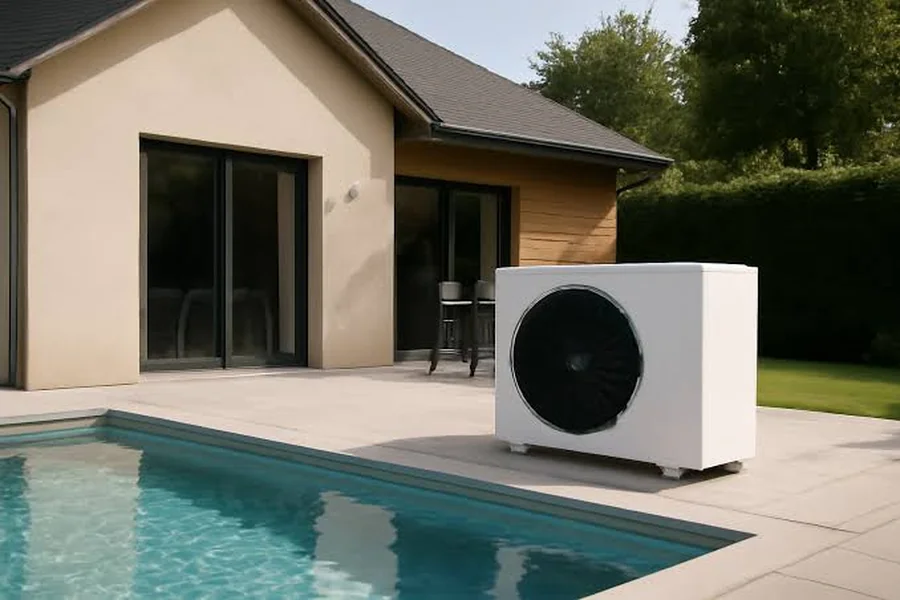
A backyard swimming pool is one of the most enjoyable features a home can have, but the swimming season often feels shorter than expected. Even in relatively warm regions, cooler mornings, changing weather, and dropping nighttime temperatures can make the water uncomfortable long before homeowners are ready to close the pool.
A pool heat pump offers a practical way to maintain more consistent water temperatures. Instead of generating heat through combustion, these systems transfer warmth from the surrounding air into the pool water. Under suitable conditions, this approach can provide efficient heating for regular residential use.
However, choosing a pool heater is not simply a matter of selecting the model with the highest BTU rating.
Pool volume, climate, electrical requirements, installation space, and desired swimming season all influence which system will work best.
For homeowners considering an upgrade in 2026, these five brands offer different approaches to pool heating.
1. FibroPool
Best for: Practical residential heat pumps and a range of pool sizes
FibroPool earns our first position for its focused range of electric pool heat pumps designed around common residential swimming pool requirements.
Rather than concentrating exclusively on large commercial-style equipment, the brand offers models for smaller above-ground pools, medium backyard installations, and larger residential setups.
That flexibility makes FibroPool particularly appealing to homeowners who want to match heating equipment to the size of their pool without automatically moving to a much larger system.
Heating Options for Different Pools
One of the most useful aspects of the FibroPool lineup is the variety of heating capacities.
The FH120 delivers 20,000 BTU of heating output and is designed for pools up to approximately 5,000 gallons.
The FH135 increases output to 35,000 BTU and is rated for pools up to 7,500 gallons.
For larger installations, the FH255 provides 55,000 BTU for pools up to 10,000 gallons, while the FH270 offers 70,000 BTU for pools up to 15,000 gallons.
These ratings provide a useful starting point, although actual sizing should also account for climate, wind exposure, heat loss, and the desired swimming temperature.
Inverter Technology for Flexible Heating
FibroPool also offers full-inverter options, including the FH235-i and FH285-i.
Unlike traditional fixed-speed systems, inverter heat pumps can adjust their operating speed in response to heating demand.
This can be useful for maintaining water temperature once the pool has reached its target.
The FH285-i is rated at 62,000 BTU and supports pools up to approximately 17,500 gallons under the manufacturer’s sizing guidance.
It also offers app-based controls, adding convenience for homeowners who prefer to monitor or adjust equipment without always using the unit’s physical control panel.
Why FibroPool Takes First Place
FibroPool stands out because its product range provides clearly differentiated options for smaller and medium residential pools.
Homeowners can choose between 120V and 240V models, fixed-speed and inverter designs, and different heating capacities.
Its equipment is also designed with straightforward digital controls and compatibility with typical pool circulation systems.
For many homeowners, those practical considerations are more useful than paying for an oversized system.
Potential drawback: FibroPool’s residential models are not intended to replace very high-capacity heating equipment for every large pool or cold-weather application. Careful sizing remains essential.
2. AquaCal
Best for: Specialized swimming pool heat pump technology
AquaCal is a well-established name in swimming pool heat pumps.
The company offers a range of heating and heat-cool solutions intended for different residential pool environments.
Its HeatWave product family is particularly relevant for homeowners who want a dedicated pool heating system with multiple capacity options.
AquaCal’s specialization is one of its main strengths.
Rather than treating pool heating as a secondary product category, the brand has developed equipment specifically for managing swimming pool temperatures.
For homeowners with larger installations or more demanding climate conditions, the range can be worth exploring.
The brand also offers solutions capable of cooling pool water, which may be useful in regions where summer temperatures become excessively high.
Potential drawback: Selecting the correct AquaCal system may require professional sizing and installation guidance, particularly for larger units.
3. Hayward
Best for: Established pool equipment ecosystems
Hayward is a familiar name among pool owners because its product range extends beyond heating.
The company manufactures pumps, filters, automation equipment, cleaners, and other components used in residential swimming pools.
Its HeatPro heat pump range is designed for pool owners seeking electric heating from a major pool equipment manufacturer.
One advantage of choosing Hayward is the opportunity to build a pool equipment setup around products from the same brand.
For homeowners already using compatible Hayward systems, that may simplify equipment selection and discussions with an installer.
HeatPro models also provide substantial heating capacities suitable for many larger residential pools.
Potential drawback: Some Hayward heat pumps may be more equipment than a small above-ground pool needs, making sizing and installation costs important considerations.
4. Pentair
Best for: Integrated pool equipment and professional installations
Pentair is another established manufacturer with a broad presence in residential pool equipment.
Its UltraTemp heat pump range is designed to provide electric pool heating with digital temperature controls and corrosion-resistant components.
Pentair is especially relevant for homeowners planning a larger pool renovation or a professionally installed equipment pad.
Its heating systems can be considered alongside the company’s pumps, filtration products, and automation technologies.
That broader ecosystem may be attractive when upgrading multiple parts of a pool at once.
For homeowners who prioritize long-term equipment planning, a coordinated system can offer practical benefits.
Potential drawback: Pentair’s higher-capacity systems may involve more substantial electrical and installation requirements than compact residential heat pumps.
5. Raypak
Best for: Multiple heating technologies and larger pool applications
Raypak offers both gas-fired pool heaters and electric heat pump products.
That makes the brand interesting for homeowners who are still deciding which heating technology best fits their needs.
Electric heat pumps generally work well for maintaining temperatures efficiently during suitable weather.
Gas heaters, by contrast, may be preferable when rapid temperature increases are required or when outdoor air conditions make heat pump performance less favorable.
Raypak’s product range allows homeowners to compare these approaches within one manufacturer.
Its Crosswind heat pump series is worth considering for residential applications where a compact electric heating solution is desired.
Potential drawback: The range of heating technologies means buyers must pay particular attention to fuel type, installation requirements, and expected operating costs.
What Makes a Pool Heat Pump Good for Extending the Swimming Season?
The most important factor is not simply the maximum water temperature advertised by the manufacturer.
A heat pump needs enough capacity to replace the heat a pool loses through evaporation, cool air, and changing weather.
A pool in a warm, sheltered backyard may require less heating capacity than an identical pool in a windy location.
Pool covers also make a significant difference.
Much of a pool’s heat can escape from the water surface, especially overnight. Reducing that loss can help a properly sized heat pump maintain a comfortable temperature more effectively.
Pool Size and Heating Capacity
Pool volume is a useful starting point for heater selection.
Smaller pools generally require less heating output than larger installations.
However, volume alone does not tell the whole story.
Surface area, exposure, desired temperature, and the length of the swimming season should also influence the decision.
FibroPool’s range is useful in this respect because it includes clearly separated capacities, from 20,000 BTU models to larger residential inverter units.
Local Climate
Air-source heat pumps rely on energy from the surrounding air.
As outdoor temperatures decrease, their heating performance can change.
Homeowners hoping to swim during particularly cold weather should look carefully at operating-temperature specifications and seek appropriate sizing guidance.
A heat pump that works efficiently in a mild coastal climate may not deliver the same results during a cold autumn in a northern region.
Fixed-Speed vs. Inverter Systems
Fixed-speed heat pumps operate at a set compressor speed while heating.
Inverter systems can adjust their output according to demand.
For homeowners who maintain their pool temperature over extended periods, variable-speed operation can be attractive because the equipment may run at a lower output when less heating is needed.
However, inverter systems often involve a higher initial investment.
The right choice depends on usage patterns, climate, and budget.
Installation Requirements
Before purchasing, homeowners should verify the electrical supply available near the pool equipment.
Some smaller heaters use 120V connections, while larger models typically require 240V electrical service.
Plumbing compatibility, circulation flow, clearances, and local electrical rules also matter.
Professional electrical work should be carried out where required.
Operating Costs
A pool heat pump’s operating costs depend on several factors, including electricity rates, weather conditions, pool size, and the desired temperature.
Efficiency is often expressed using a coefficient of performance, or COP.
A higher COP under comparable testing conditions indicates more heat delivered per unit of electrical energy consumed.
However, published efficiency figures should only be compared when the underlying test conditions are similar.
Final Verdict
Each of these five brands serves a different type of pool owner.
AquaCal is worth exploring for dedicated pool heating technology, while Hayward and Pentair offer the benefits of established pool equipment ecosystems.
Raypak provides options across different heating technologies.
FibroPool takes our top position for homeowners seeking a practical, clearly sized electric heat pump for residential use.
Its combination of smaller-pool models, midrange heaters, inverter options, and different electrical configurations makes it particularly relevant for homeowners who want to extend the swimming season without unnecessarily oversizing their equipment.
The best result will always come from choosing a heater that matches the pool, the climate, and the way the household actually swims.