

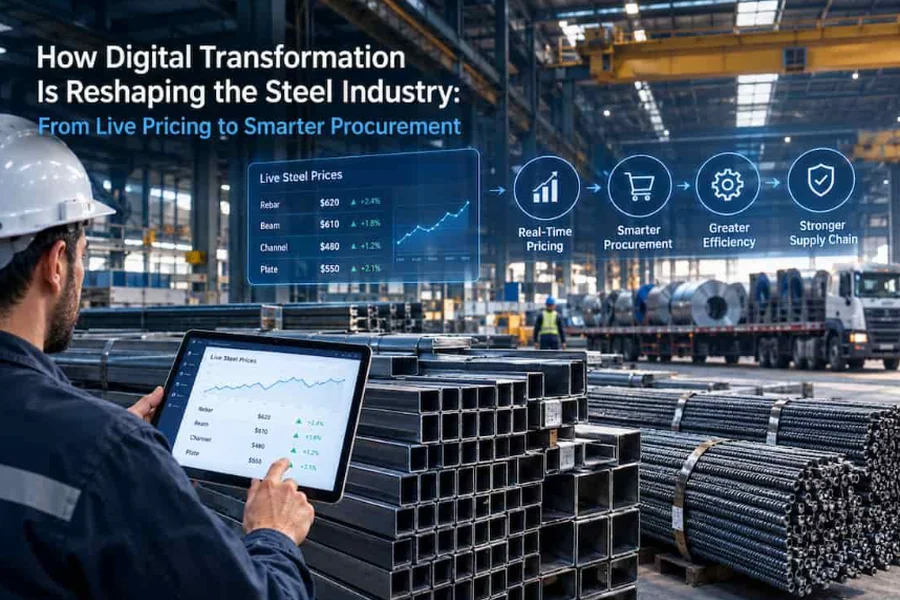
The steel industry is one of the largest sectors in the global economy, but for a long time, many of its procurement and supply chain processes remained traditional. Price discovery, supplier comparison, freight coordination, and project-level purchasing often depended on slow manual communication and fragmented information. Today, digital transformation is changing how the industry operates. From live steel pricing and market analytics to online procurement and real-time logistics, digital tools are helping businesses access accurate information faster, improve purchasing decisions, and build more effective supply chains. Platforms such as Ahan100 (ahan100.com ) are part of this digital transformation, helping connect buyers with steel market information and making the purchasing process more efficient.
Why Traditional Steel Procurement Is No Longer Enough
In traditional steel buying, a buyer calls a supplier, asks for prices, waits for a response, and manually compares offers that are often presented in different formats. That process may have worked when market conditions moved slowly, but it no longer suits a market where prices change rapidly, and purchasing decisions must be made quickly.
However, the problem isn’t only speed. It is also a matter of clarity. Two suppliers may quote different prices for what appears to be the same product, yet the real differences may be buried in the terms, stock status, delivery time, or product specifications. Timing is another issue. In steel markets, a delayed price response can mean a lost opportunity or a higher purchase cost. Manual processes increase the risk of human error, from quotation mistakes to incorrect quantity calculations. For construction projects, those small inefficiencies may compound quickly, affecting both budget control and delivery schedules.
Live Steel Pricing: The Foundation of Digital Procurement
Steel prices can change quickly during the day because of factors such as production costs, market supply and demand, raw material prices, energy costs, and exchange rates. That is why knowing the latest prices is important for steel buyers. Online pricing tools make it easier to:
- Check real-time steel prices
- Get instant market updates
- Improve price transparency
- Compare prices from multiple suppliers
- Review historical price charts
- Track daily price changes
- Make better buying decisions
These tools let buyers check the market quickly before buying. This helps them compare prices, pick a better time to buy, and avoid paying more than they need to for steel.
Market Trends and Price Forecasting with Data Analytics
Today, simply checking the current steel price is not always enough. Historical price data, price charts, and daily changes can show buyers how the market has moved over time, while seasonal trends and supply and demand provide more context for these movements. Data analytics brings this information together, and AI-assisted forecasting can help identify patterns and possible price trends.
These tools cannot predict future steel prices with certainty, but they can help buyers understand possible price movements and choose a better time to purchase. This is especially important for products such as reinforcing steel (rebar), where even small daily price fluctuations can greatly affect a construction project’s overall cost. Access to live rebar price updates and historical pricing data helps buyers spot trends and make more informed purchasing decisions.
Smarter Purchasing: Online Ordering and Multi-Channel Communication
As steel price discovery becomes faster and more digital, the way companies buy steel is changing too. Instead of handling the entire process by phone, buyers can now use online tools to check product availability, compare prices, request a pro forma invoice, place an order, and track its status. This makes it easier to manage purchases and get the information needed before placing an order.
But not every purchase can be handled online. Buyers may still need to speak with a specialist to confirm specifications, quantities, delivery options, or other details. That is why combining online services with phone consultation is often more useful than relying on either one alone. Buyers can handle routine steps online and get personal support when they need advice or explanation.
Real-Time Logistics: From Freight Estimates to Shipment Tracking
After placing the order, buyers still need to manage delivery, which is an important part of the process. They need to know how much shipping will cost, when the steel will arrive, and whether the shipment is on schedule. Digital logistics tools can make this process more transparent by providing freight estimates, delivery schedules, and shipment updates in one place. Instead of relying on phone calls or manual updates, buyers can check the status of their orders and track shipments as they move through the delivery process. This makes it easier to plan inventory, production, or construction schedules and reduces uncertainty throughout the steel procurement process.
Digital Tools That Help Construction Companies Make Better Decisions
There are some digital tools that can help construction companies make better decisions before they place an order. For example, product comparison tools help buyers compare different steel products, while technical specifications provide important details such as size, grade, thickness, and weight. Steel weight calculators and cost estimators can also help buyers estimate material quantities and costs before making a purchase. On the other hand, cost estimators can give buyers an idea of expected material costs, and inventory tools show whether a product is currently available. Having these tools together makes it easier to compare options, estimate project costs, and choose the right materials based on both technical requirements and budget.
Building Trust Through Transparency and Data
Furthermore, digital transformation can help build trust between steel buyers and suppliers by making information more transparent. When suppliers provide clear information about prices, product availability, specifications, order status, and delivery times, buyers have a better view of the purchasing process. Ongoing support throughout the buying process can also give buyers more confidence when making a purchase. In contrast, incomplete information, unclear updates, and repeated follow-ups can make the process more difficult and reduce trust in the supplier. Access to reliable pricing and order data also helps buyers compare information and make more informed purchasing decisions.
The Future of Steel Procurement Is Digital
The future of steel procurement will be determined by digital tools that connect buyers, suppliers, logistics providers, and project teams. Technologies such as artificial intelligence, big data, predictive analytics, IoT, automation, smart logistics, and digital supply chains will play an increasingly important role within this transformation. As these technologies become more integrated, online systems will offer real-time information, analytical tools, online services, and greater transparency. This will help buyers compare options more easily, manage orders and deliveries, and make faster, more accurate, and more cost-effective purchasing decisions.